Route 66 Special Matchbooks and Matchcovers
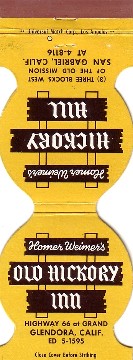
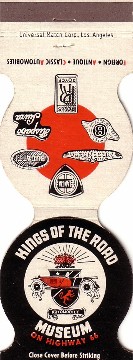
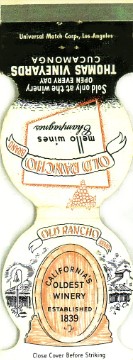
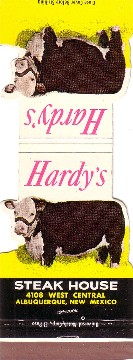
Die-Cut Matchcovers were cut into a form that was not perfectly rectangular. Metal dies punched the matchbook cardstock into a more interesting shape, much like a baker would take a decorative cutter to cookie dough. The matchbook manufacturing companies used different names for these types of matchbooks. The Longpre Pontiac matchcover is a Contour Match® made by the Lion Match Company. The Old Hickory Inn, the Kings of the Road Museum, the Thomas Vineyards (has a US Highway 66 map on the inside), and the Hardy's Steak House are all Jewelites® and were made by the Universal Match Corporation.

The Midget Matchbook was a small matchbook designed to fit more easily into a lady's purse. It was proportioned similar to a 20-strike matchcover but it held only fourteen matches. As a flat matchcover the dimensions are approximately 1 1/8" by 3½". All midgets are front strike and the design was not particularly popular. Here is a side-by-side example of a 20-strike matchcover (approximately 1½" by 4½") and a midget matchcover:
 20-Strike Matchcover
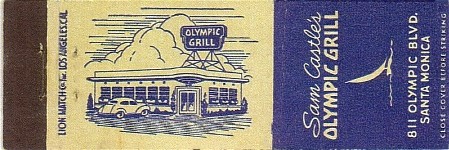 14-Strike Midget Matchcover
Serious Route 66 fans know that for most of the halcyon era of US Highway 66 the highway officially left Santa Monica Blvd. at Lincoln Boulevard (about eight full blocks from the Pacific Ocean) and traveled southerly for another three blocks to the junction of US Highway 101A at Olympic Boulevard. Hence the official end of US Highway 66 was neither Ocean Avenue (where the Will Rogers Highway plaque is located) nor the Santa Monica Pier, but rather at the corner of Lincoln and Olympic where the Olympic Auto Hotel (matchcover shown above left) was. Note that this 20-strike matchcover states "Olympic Grill in Connection" so, although the midget matchcover on the right is from the Olympic Grill and has a street address on Olympic Blvd. (not 66), because the Grill shared the premises with the Olympic Auto Hotel, Mr. Fleming and I consider it to be a 66 midget matchcover. By the way, neither of us have ever seen a midget matchcover that says "US Highway 66" on it. We have no idea why. The street address is helpful to associate these midget matchcovers with US Highway 66. Here are several more midget matchcovers that may be of interest:
 |
 |
 |
 |
 |
 |
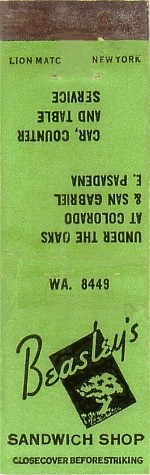
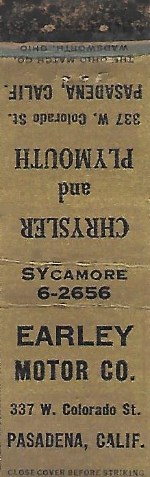
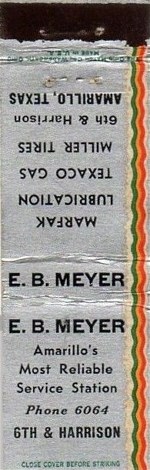
Beasley's Sandwich Shop and the Earley Motor Company were on Colorado Blvd. (Highway 66) in Pasadena. The E. B. Mayer Texaco gasoline station was on 6th Street (Highway 66) in Amarillo. Hibler's Cafe was on Route 66 in McLean, Texas, as can be seen at the bottom of this webpage where some Pull Quick devices are displayed. Well-known in Albuquerque, the Katson family ran various retail enterprises at several locations along Central Avenue (Route 66, of course). One of the most coveted Curteich linen postcards for not only Route 66 postcard collectors but also collectors of the best Americana postcards, is the stunning night-time view of Katson's Drive In.
Perhaps the most interesting (and more expensive) type of matchbook that existed was called the Feature Matchbook where a color image is printed across the matchsticks themselves. A cousin was the Printed Stick Matchbook where promotional slogans or messages are printed on each matchstick. Collectors usually do not remove the matchsticks from these types of matchbooks since much of the interest and beauty is in the matchstick printing itself. It was common in both of these special matchbook types that each row of matchsticks had the same picture or message printed across them so as matchsticks were used from the front rows, new matchsticks were revealed that had the same picture or message and so the overall picture or text message was visually maintained. Each printed stick matchstick is the same size as a traditional matchstick so the number of individual printed stick matchsticks in a given size of matchbook was identical to the number in a non-printed stick matchbook. That is, a 30-strike printed stick matchbook would have similar overall dimensions as a regular 30-strike matchbook. But this was not the case with a feature matchbook where the matchsticks are wider than normal. Also, it was not unusual for a complete row of matches to not even be included inside the feature matchbook. For example, a feature matchbook that was sized like, say, a traditional 30-strike matchbook (four rows of alternating seven or eight matchsticks each) more commonly would have only three rows of seven wide matchsticks each (21 total matchsticks).
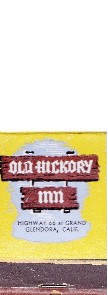
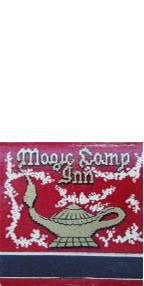
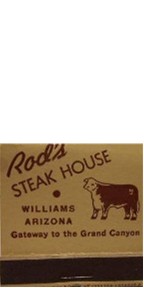
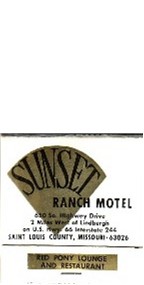
Below are four feature matchbooks and two printed stick matchbooks from businesses associated with Route 66. The Old Hickory Inn restaurant in Glendora feature matchbook shows a whole chicken roasting on a spit over the fire printed in color over its extra-wide matchsticks. The Magic Lamp Inn restaurant in Cucamonga feature matchbook shows an interior restaurant dining room printed across its extra-wide matchsticks. The Rod's Steak House in Williams feature matchbook shows a steer and the Chicken in the Rough® feature matchbook has the iconic golf-playing chicken of course. (Look carefully to see that the Chicken in the Rough® feature matchbook is missing the right front matchstick and you can see the printing on the matchstick revealed below the missing one.) The Campbell 66 Express (based in Springfield, Missouri) rear-strike printed stick matchbook has a different state to which they provided truck transportation services printed on each match. The Sunset Ranch Motel near St. Louis rear-strike printed stick matchbook has a different motel amenity printed on each matchstick.
Scroll over each closed matchbook to make them pop open.


The Giant matchbook was a feature matchbook that was about the same size as a flattened 40-strike matchcover. Recall that the approximate size of a flattened 40-strike matchcover is 3" by 4½". The folded Giant matchbook is about 3 3/8" by about 4". But if the Giant matchbook is shucked and flattened to become a matchcover it is 3 3/8" by a whopping 9" long! (But since Giant matchbooks are feature matchbooks, collectors usually keep them intact as matchbooks.) The Giant matchbook seemed to be more like a colorful gift or souvenir for the customer. The fact is that it was too large to comfortably fit into a man's pocket and took up substantial room in a woman's purse. Also there was only one row of eleven matchsticks inside so it simply did not provide many lights for the smoker.
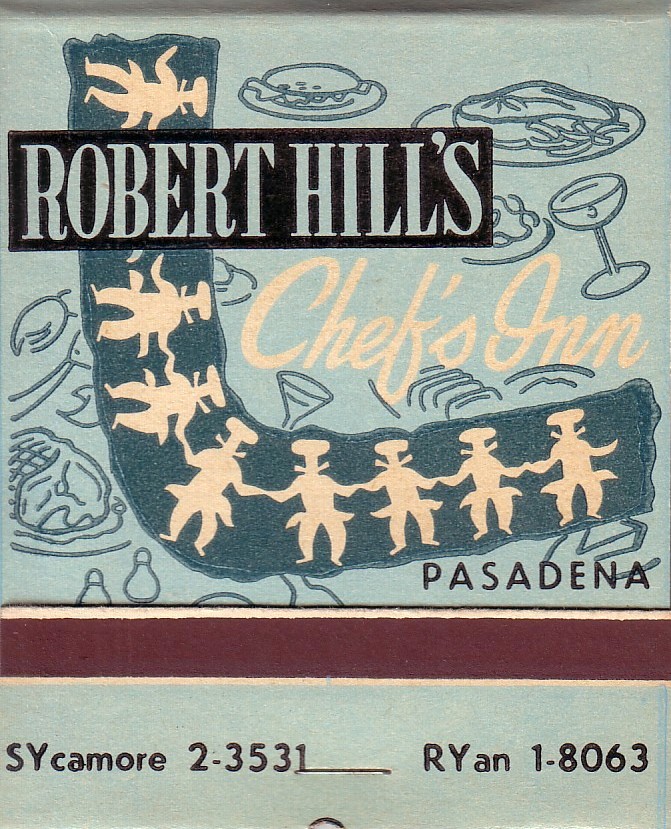
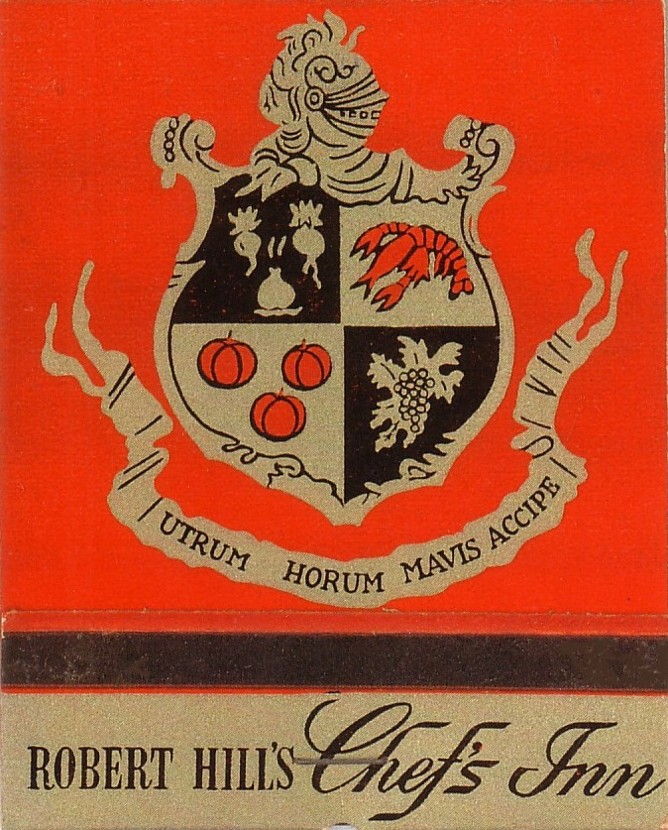
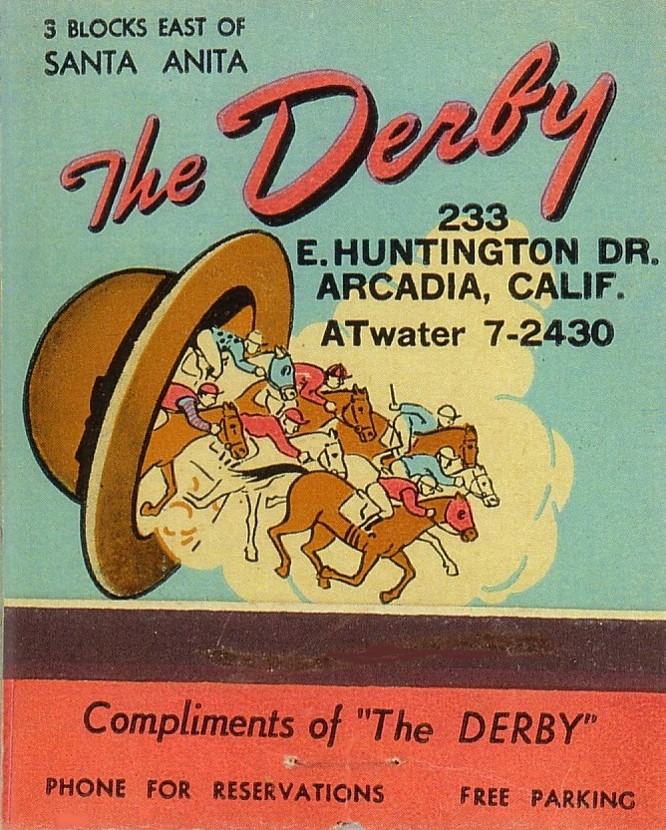
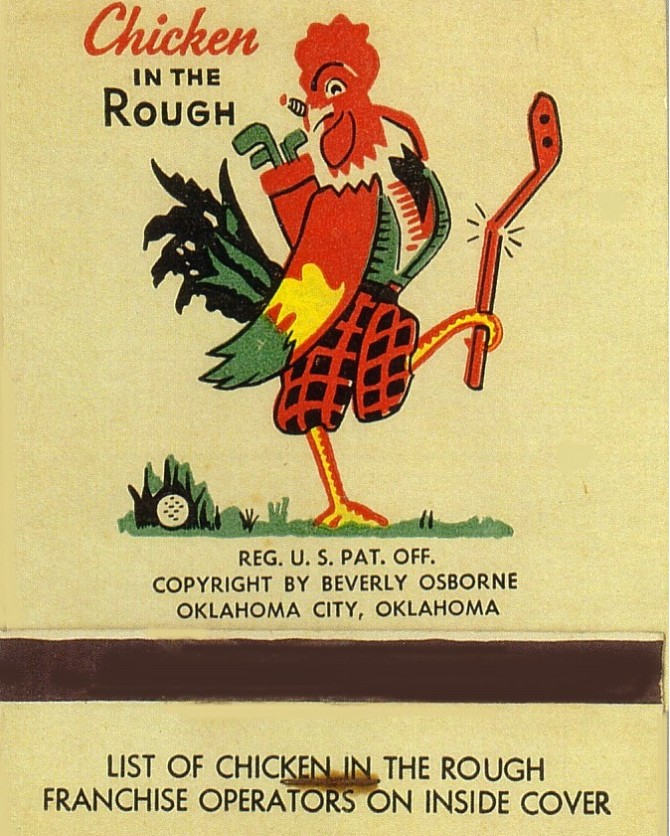
The four Giant matchbooks below are from businesses on Route 66 but none of them have the highway number of 66 printed on them. Since feature type matchbooks were more expensive to manufacture than non-feature matchbooks they were more likely to be distributed by the fanciest big city restaurants. Or at least a restaurant that wanted to convey to its smoking patrons that the restaurant itself was a special place to eat. The small cafes, diners, and restaurants that were most often patronized by the Route 66 traveler usually provided less expensive 20-strike matchbooks to their customers. The three matchbooks to the left are from very nice restaurants in suburban Southern California while the matchbook on the right is from Chicken in the Rough® based in Oklahoma City. (The flagship Chicken in the Rough® restaurant in Oklahoma City was just north of the state capitol building on Lincoln Blvd. which was Route 66.) As you scroll over the left-most Giant matchbook from Robert Hill's Chef's Inn in Pasadena, you will see the feature matchbooks inside. As you scroll over the other Giant matchbooks you will see the reverse side of the book.
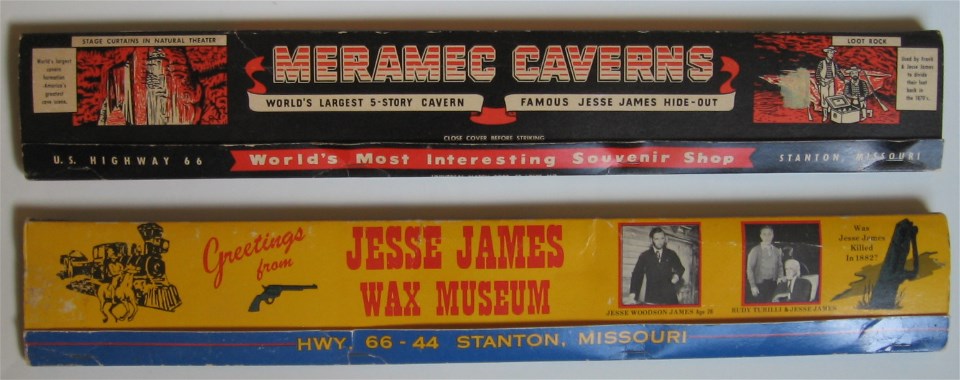
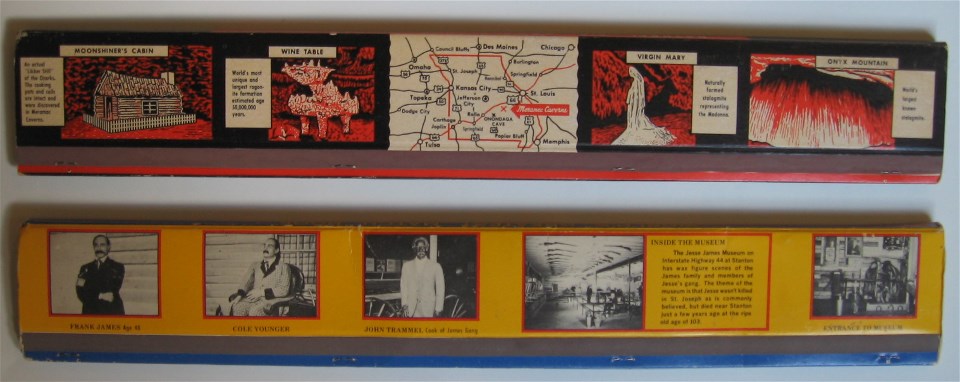
One novelty matchbook style is a huge 200-strike matchbook which was made by Universal Match. The matchbooks shown below from the Meramec Caverns and the Jesse James Wax Museum in Stanton, Missouri, are 12½" long. There are four rows with fifty match sticks each inside. These matchbooks obviously were expensive to manufacture so they were sold in the gift shops as souvenirs. I scanned the front and the rear sides. The strikers are on the rear covers.
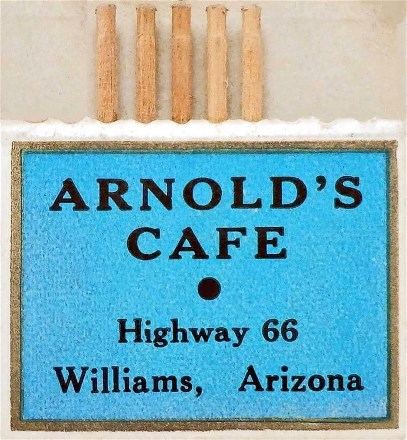
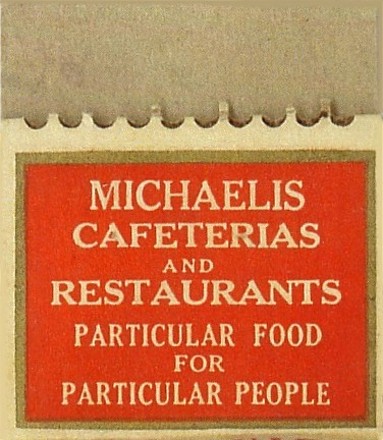
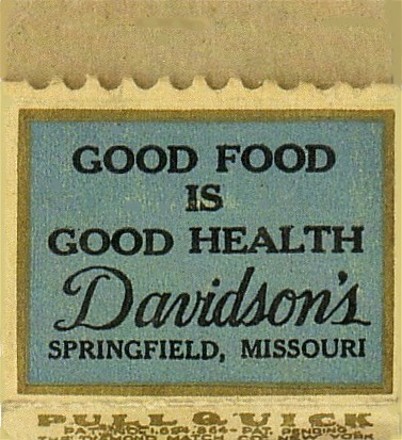
The five devices below are all rare and interesting implements to deliver lit matches to the user. Neither a folded paper matchbook nor a traditional matchbox, the Diamond Match Company introduced these Pull Quick gadgets in the 1930s. A striker was put inside the cardstock structure and each of the ten wooden matches resided in their own slot with each match head resting against the hidden striker material. If the smoker quickly pulled the match out from its compartment they would get a lit match! Clever, huh? These Pull Quick devices were much more expensive to make, provided only ten matches, and were gone by World War II. These five "Pull Quick" devices are about eighty years old. All Diamond Pull Quicks are a little larger than 2 inches on a side and about 1/8" thick. The Log City Camp is full but only five of the original ten matchsticks are shown in the Arnold's Cafe and only two of the original ten matchsticks are shown in the Hibler's Cafe. The Michaelis Cafeteria and the Davidson's are both empty. (The Joplin location of the Michaelis Cafeteria was on Highway 66. Davidson's Cafeteria was on St. Louis Street in Springfield, which was also Highway 66.) Scroll over each picture to see the back side.


Below are picture links to the other informational web pages and gallerys of Route 66 matchcovers and matchbooks.
Return to Route 66
Matchcover Home
Introduction
to Route 66
Matchcovers

Selected Themes
of Route 66
Matchcovers
Route 66
Matchcover Sets
Route 66 Full Length Matchcovers